


Your business can have a strong year on paper and still leave you wondering why your bank balance feels tight. It’s a common challenge for growing businesses, especially when sales are up and operations are moving fast.
Cash flow and profit are connected, but they are not the same thing. Knowing the difference can help you make smarter decisions and avoid surprises when bills, payroll or taxes come due.
Why profits don’t always mean cash in the bank
There are several reasons your business may look profitable while your available cash stays low.
Customers haven’t paid yet
If you invoice clients or offer payment terms, some of your revenue may still be sitting in accounts receivable. The sale counts toward your profit, even if the money hasn’t reached your account yet. Late payments can create a gap between what your books show and what you can actually spend.
Inventory is eating up cash
Buying extra inventory can prepare your business for busy seasons or future growth, but it also ties up cash. Until those products sell, your money is sitting on shelves instead of in your account.
You invested back into the business
Many businesses reinvest earnings into equipment, vehicles, technology or new space. These purchases support long-term growth, but they can temporarily reduce available cash.
Owner draws add up
Business owners rely on their companies for income, but taking too much out too quickly can strain day-to-day operations. Clear budgets and planning can help keep things balanced.
Watch the timing of money moving in and out
One of the biggest cash flow challenges is timing.
You may need to pay suppliers, employees or operating costs before customers pay their invoices. Even profitable businesses can run into stress if incoming cash doesn’t line up with outgoing expenses.
Reviewing receivables often, following up on overdue invoices and understanding your payment cycles can help you stay ahead.
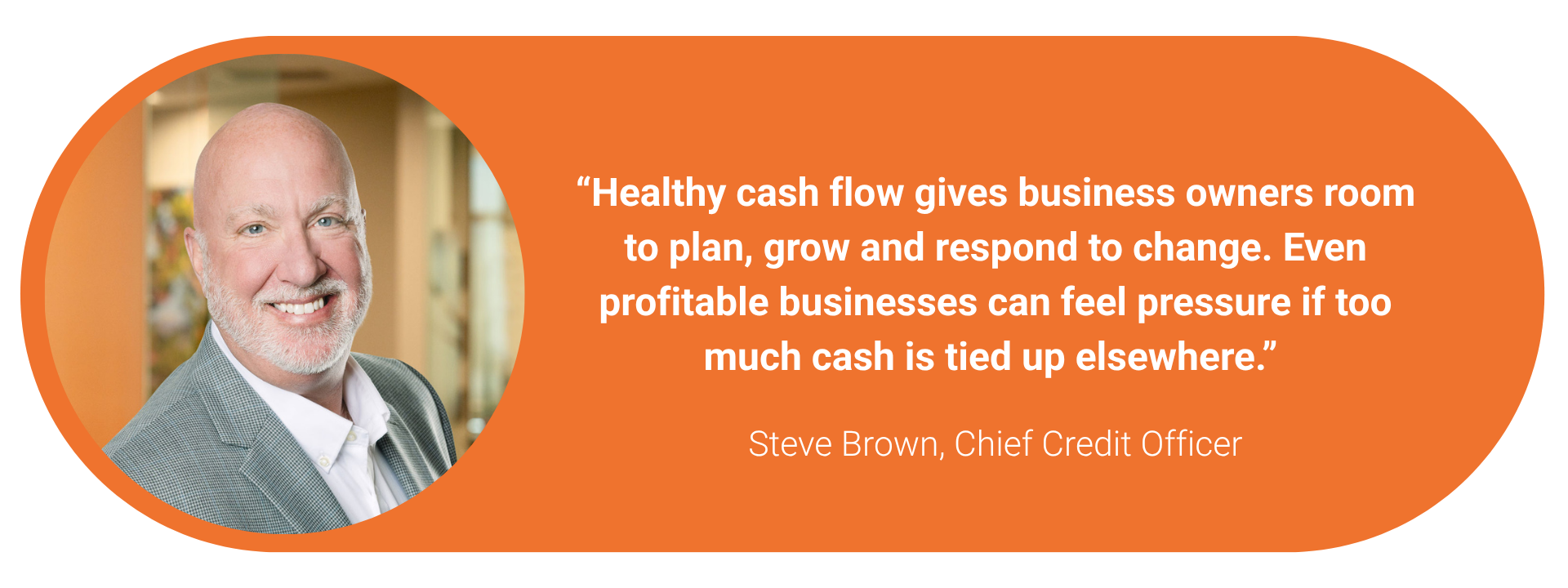
.png?sfvrsn=375eb399_1 "Cash flow quote - Ian Zimmerman")
Use tools that give you a real-time view
Cloud-based accounting systems can help you track transactions, reconcile accounts and monitor cash flow in real time. The faster you can spot trends or issues, the faster you can respond.
Small habits can make a big impact, including:
- Reviewing unpaid invoices weekly
- Keeping a close eye on inventory levels
- Planning ahead for taxes and large expenses
- Building cash reserves when possible
- Monitoring seasonal ups and downs
Build a buffer for the unexpected
Even with strong planning, cash flow gaps happen. Seasonal slowdowns, delayed payments or unexpected expenses can create pressure on your business, especially when timing doesn’t line up.
One way businesses prepare for these situations is by building a financial buffer.
A reserve account, such as a dedicated business checking account, can help create separation between your operating funds and emergency savings. Setting aside extra cash during stronger months can provide flexibility when expenses rise or revenue slows.
For businesses that experience regular swings in cash flow, a working capital line of credit may also help bridge short-term gaps. Instead of disrupting operations or delaying opportunities, businesses can use available funds to manage day-to-day expenses while waiting for incoming revenue.
Whether it’s building reserves, improving payment cycles or preparing for future growth, having the right strategy in place can help your business stay flexible when conditions change.
Planning ahead helps your business stay flexible
Cash flow challenges do not always mean your business is struggling. In many cases, they are simply part of growth.
The key is understanding where your money is going and building a plan that supports both today’s needs and tomorrow’s goals.
At Solarity Credit Union, our business banking team works with local businesses to help them stay prepared for what’s next, whether that means managing day-to-day cash flow, expanding operations or planning for future growth.


What's your Solarity story?
We're on a mission to tell the stories of our members and how they are living their best lives. Do you have a Solarity story to share?